
Practice · Eqora guide
Use math flashcards and quizzes to lock in what you learned
Turn a solved problem into spaced practice before the test.
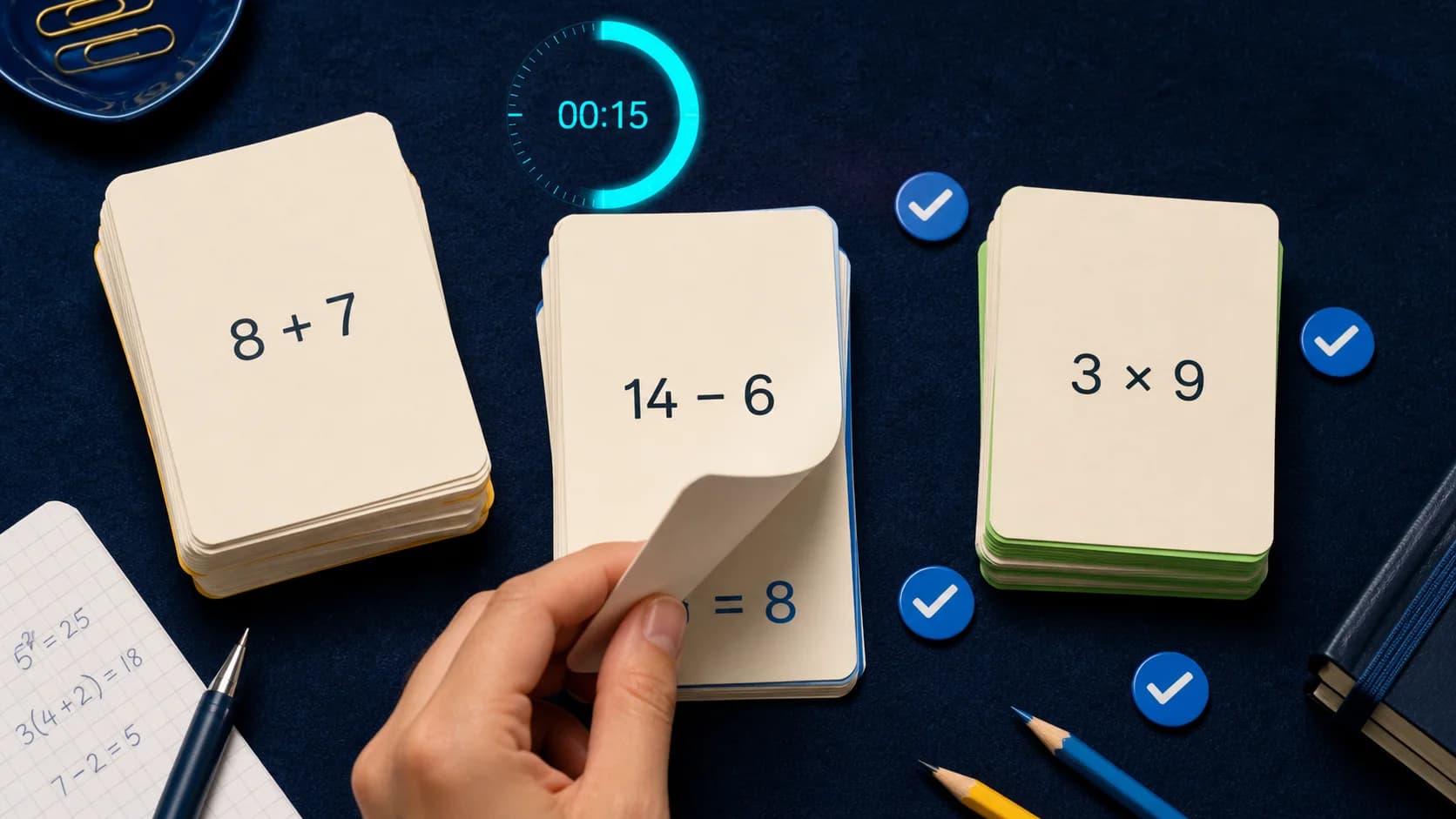
Solved once is not mastered. Eqora can turn a tutoring session into flashcards or a quiz so you rehearse the idea later.
After every tough problem
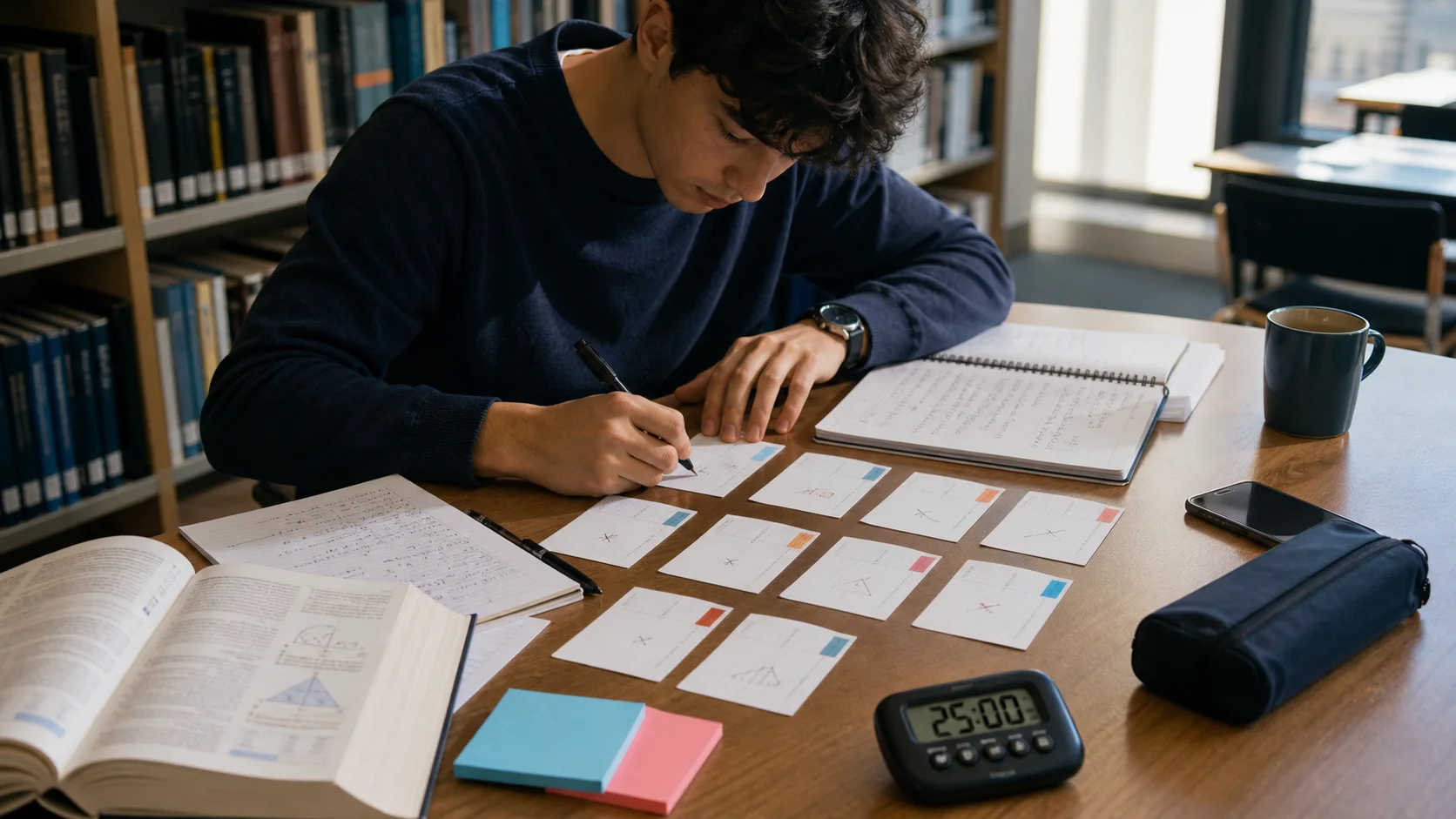
Ask for three flashcards covering the rule, a worked micro-example, and a common mistake. Quiz yourself the next day.
Weekly weak-spot quiz
Pick your two weakest topics from the week and generate a short quiz. Review misses in tutor chat immediately.
Short, frequent quizzes beat one long cram session.
Make cards that test decisions, not copied solutions
A useful math flashcard asks for a definition, a method cue, a condition, a diagram label, or the next step in a small example. A card containing an entire worked problem is often too large to diagnose what was forgotten.
Include common-error cards that ask what is wrong with a plausible line. These are especially useful for sign changes, domain restrictions, units, and methods that look similar but apply under different conditions.
- Concept: explain the idea in one or two sentences
- Cue: identify when a method applies
- Micro-example: complete one decisive step
- Error check: diagnose and repair a realistic mistake
Use spacing without making review endless
Review difficult cards after a short delay, then on later days. Retire cards that are consistently easy and replace them with mixed problems that require choosing the method. The goal is durable recall, not maintaining an ever-growing collection.
Keep a compact weak-spot deck tied to the current course. During exam preparation, combine card review with full written problems under realistic conditions. Flashcards support components of a method; they do not replace extended reasoning.
Design quizzes that reveal transfer
Mix familiar and slightly changed questions. Vary coefficients, context, representation, and the order of topics so the correct method is not announced by a section heading. Include at least one question that asks for an explanation or check, not only a numerical result.
After marking, sort errors by cause and retry a related question later. If a quiz miss came from an unclear concept, return to the explanation; if it came from execution, practice the specific step. Repeating the identical quiz can inflate confidence through memory.
A strong quiz tells you what to study next. Its purpose is diagnosis as well as scoring.
Put it into practice now
Choose one problem from your current homework or review set. Attempt it before opening Eqora, then use the app only at the point where your own reasoning stops.
- State what the problem is asking before you solve it
- Identify the first step you cannot justify
- Ask Eqora one focused follow-up about that step
- Finish with a similar problem and no solution in view
The session is complete when the method is clearer, not simply when the worksheet has one more answer.