
 Featured
Which variable should the elimination method remove?
Choose the easier coefficient pair, combine whole equations, and test the ordered pair in both originals.
The Eqora blog
Practical articles for homework nights, exams, and clearer methods.
FeaturedChoose the easier coefficient pair, combine whole equations, and test the ordered pair in both originals.
 Featured
Make sense of reciprocal multiplication, catch the tempting wrong flip, and use one checked example to practise independently.
 Featured
Locate the target between two measured inputs, carry the same fraction across the output interval, and state when a straight-line estimate is reasonable.

Set domain restrictions first, combine logarithms lawfully, solve the resulting equation, and reject candidates that break the original logarithms.

Separate simple from compound growth, translate rates and periods correctly, calculate by table and formula, and test whether an answer is plausible.

Recognize a composite function, differentiate from the outside inward, inspect the inner derivative, and prove the method on a fresh problem.

Identify the legs and hypotenuse, find a missing side, test the converse, and avoid using a right-triangle formula on the wrong figure.

Choose the correct branch at a boundary, calculate values, read open and filled endpoints, and test a new example without assistance.

Calculate both centers, see what a single extreme value changes, handle an even-sized set, and choose a statistic that answers the actual question.

Turn distance from zero into two valid equations, inspect an assisted solution without copying it, reject impossible branches, and finish with an independent check.

Read a 1:25,000 scale, measure a straight line or curved route, convert units, and reverse the calculation without treating a resized map as exact.

A slower outward leg takes longer. Learn to combine distance and elapsed time, include pauses, and check a two-speed result without guessing.

Work through a small urn problem, update the second fraction correctly, use a probability tree, and check answers with combinations and complements.

Use the slope formula with negative coordinates, keep each point together, recognize horizontal and vertical lines, and verify the result without guessing.

Learn which starting value belongs in the denominator, why a rise from 40% to 46% has two valid descriptions, and how to check percentage increases and decreases.

A worked radical equation shows how to check the captured problem, separate candidates from solutions, question one doubtful step, and verify the result yourself.

A practical boundary for checking the rules, making your own attempt, requesting limited help, verifying the mathematics, and protecting your independent work.

Learn how to identify the inner function, convert the differential, inspect an assisted solution, and verify the antiderivative by differentiating it.

A dependable method for turning marks, labels, and written conditions into a proof you can trust, even when the sketch is not to scale.

A practical way to judge math apps by the learning they support, not by how quickly they reveal a final answer.

A calm, practical routine for parents who want to support mathematical thinking without giving answers or reteaching the whole lesson.

Learn why differentiating a product creates two terms, work through a complete example, and use an AI tutor without handing over the thinking.

A practical routine for removing personal details, sharing only the problem you need, and checking the rules before a worksheet leaves your phone.

A practical way to scan one real problem, confirm the notation, question the method, and finish with work you can do independently.
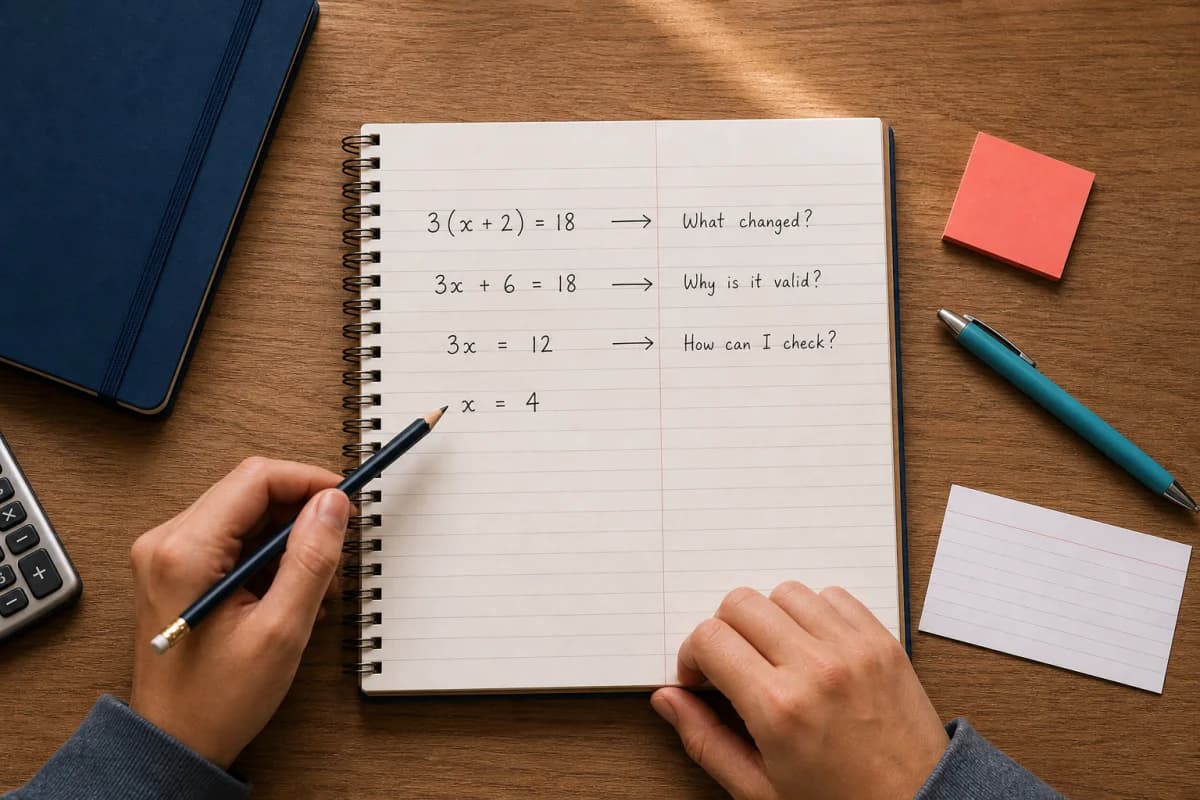
Turn each line of a solution into a decision you can justify, check, and use again without the model in front of you.
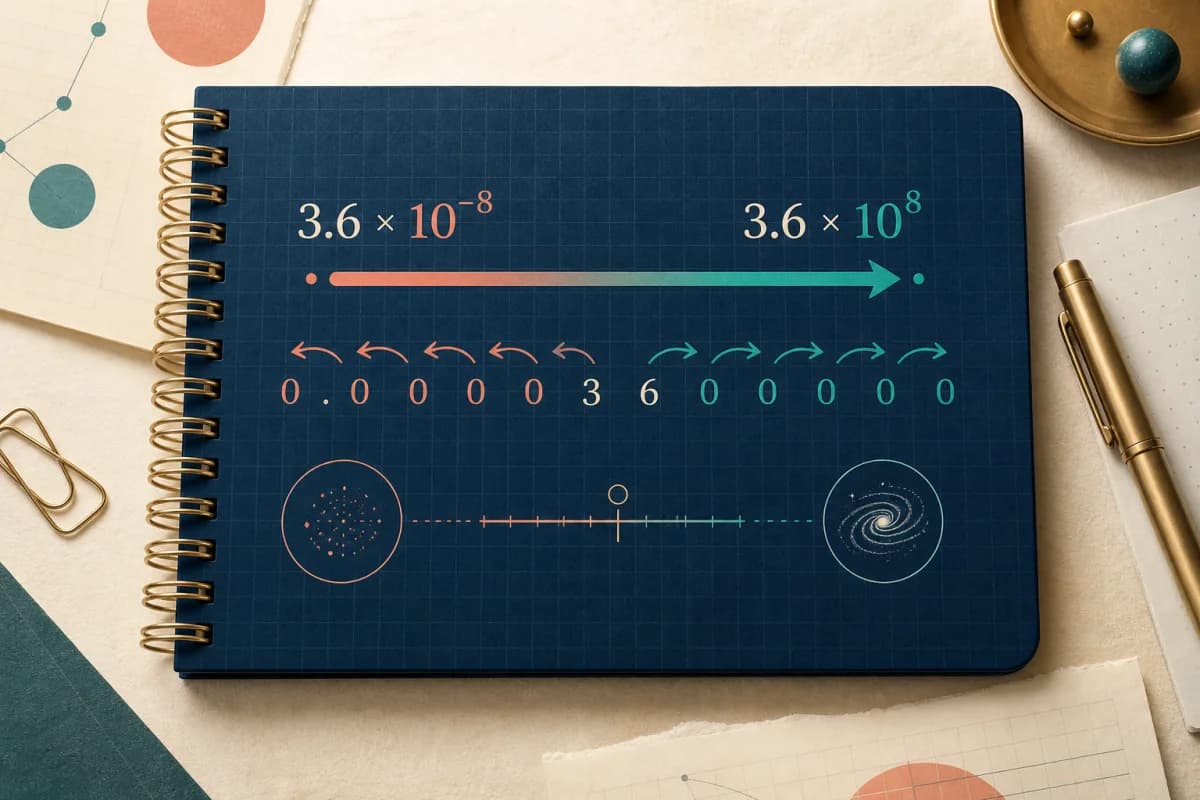
Write very large and small numbers in standard form, then multiply, divide, add, and check them without losing a power of ten.
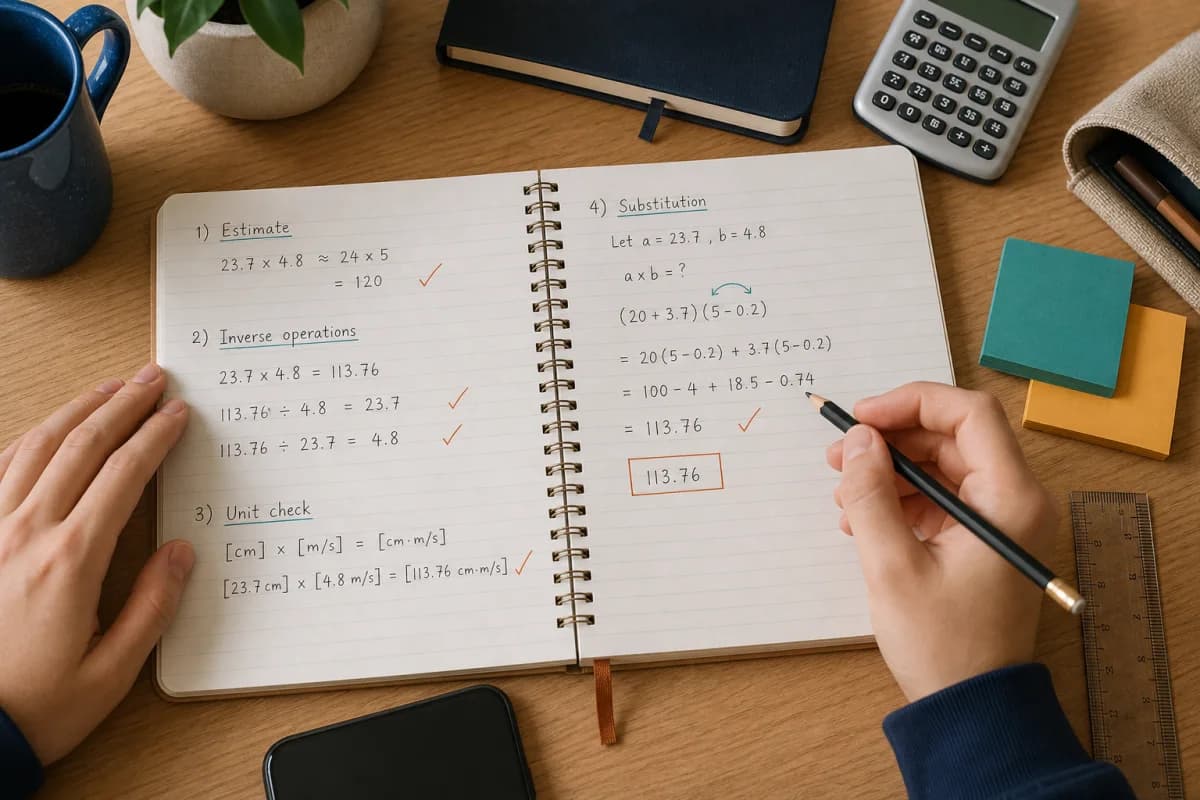
Use estimation, inverse operations, substitution, units, and boundary checks to decide whether a result deserves your confidence.
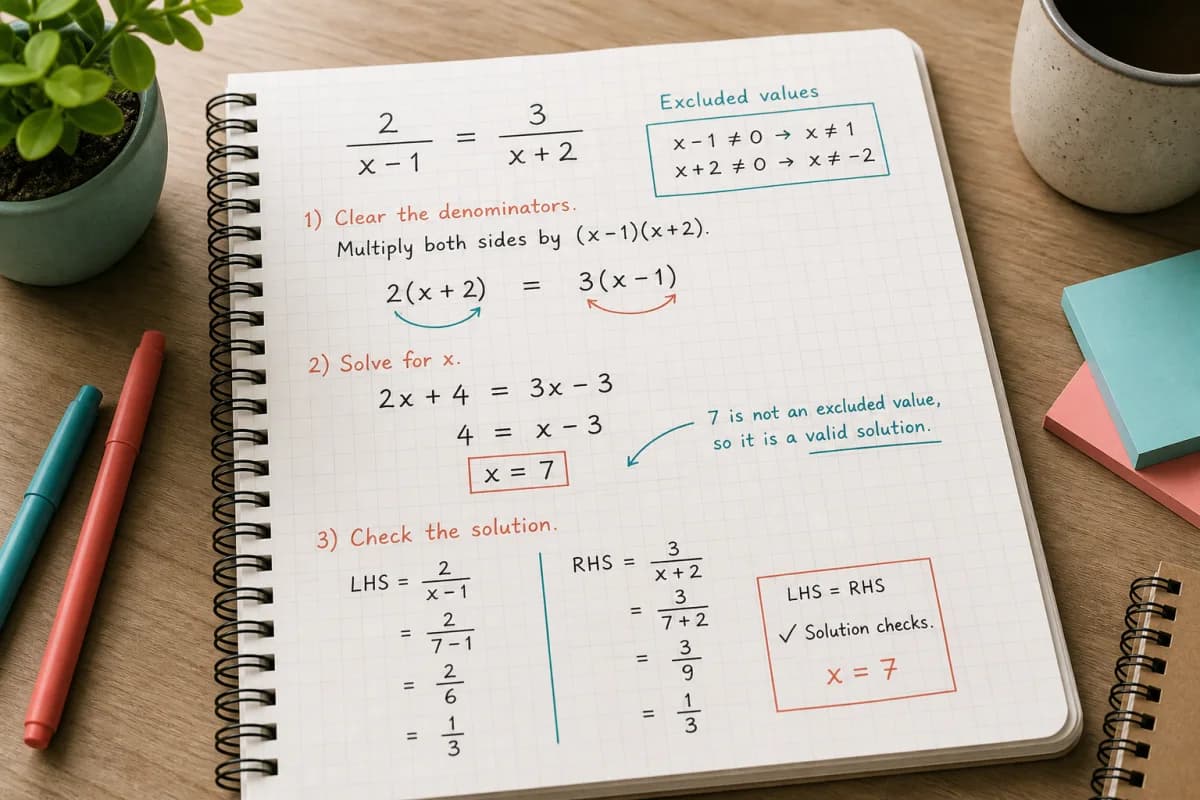
Record excluded values, clear denominators carefully, solve the resulting equation, and test every candidate in the original problem.
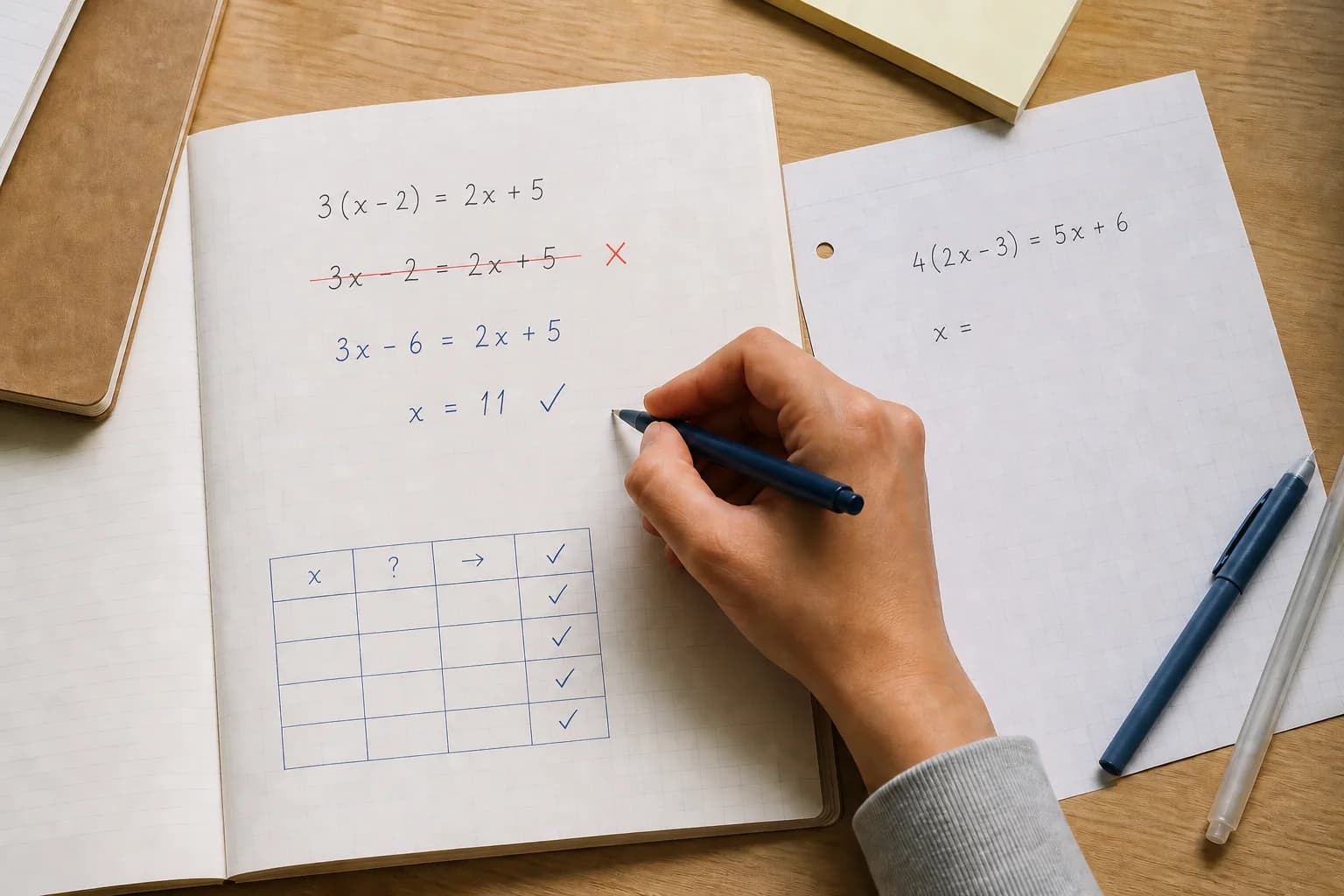
Capture the first wrong decision, name its cause, repair the method, and turn each mistake into targeted independent practice.

Derive the rules from repeated multiplication, handle zero and negative powers, and check a multi-step simplification.
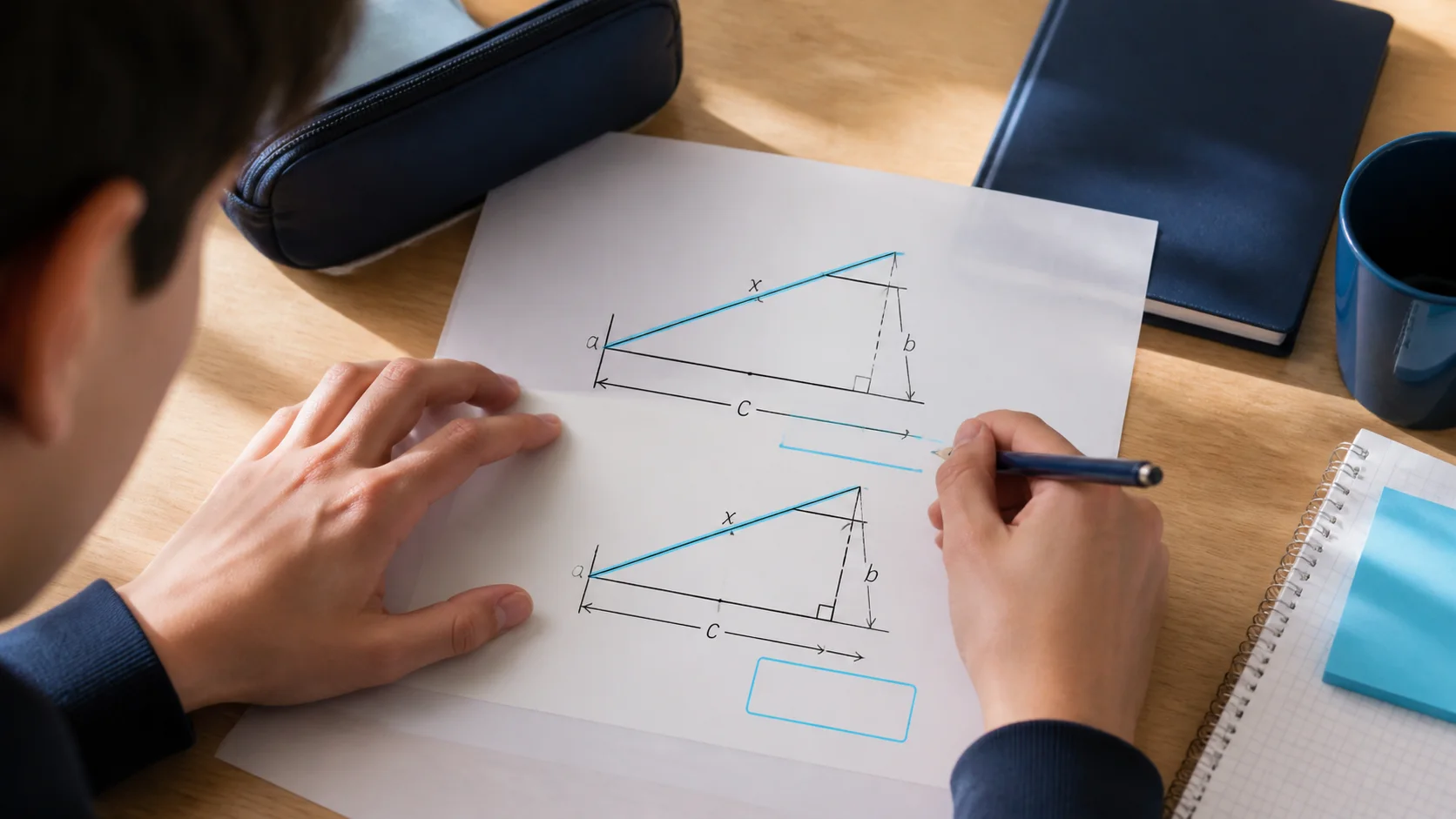
Turn a finished solution into predictions, explanations, changed examples, and a problem you can solve alone.

Read the solution set, reverse the sign only when required, and verify boundaries on a number line.
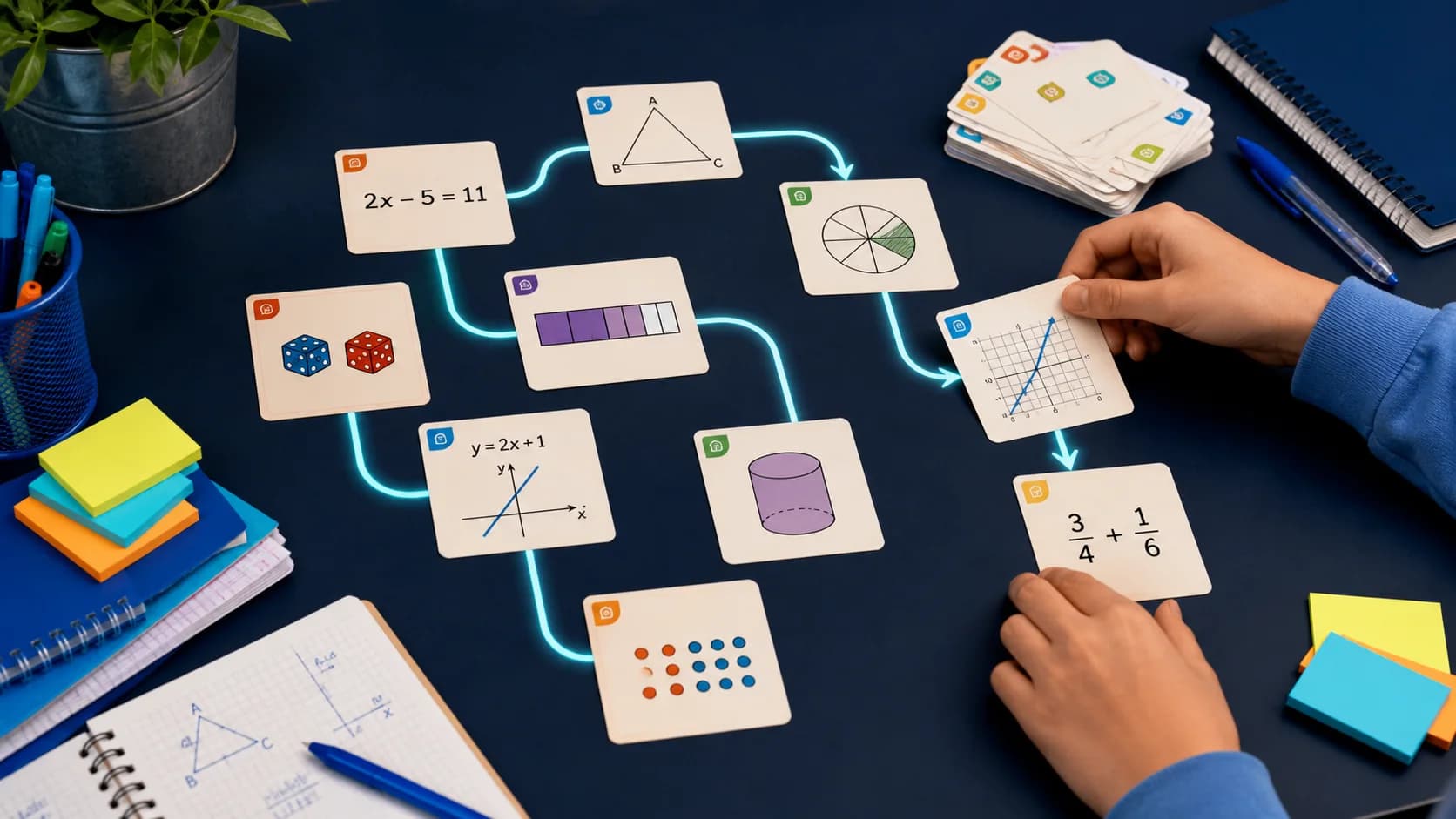
Mix problem types deliberately, choose each method from the clues, and review mistakes without turning practice into a guessing game.

Interpret the intersection, work through elimination and substitution, and verify both equations without relying on guesswork.

Define the experiment, choose the right representation, and interpret results with their conditions still attached.

Connect ratios, the unit circle, identities, and periodic graphs instead of treating them as separate formula lists.
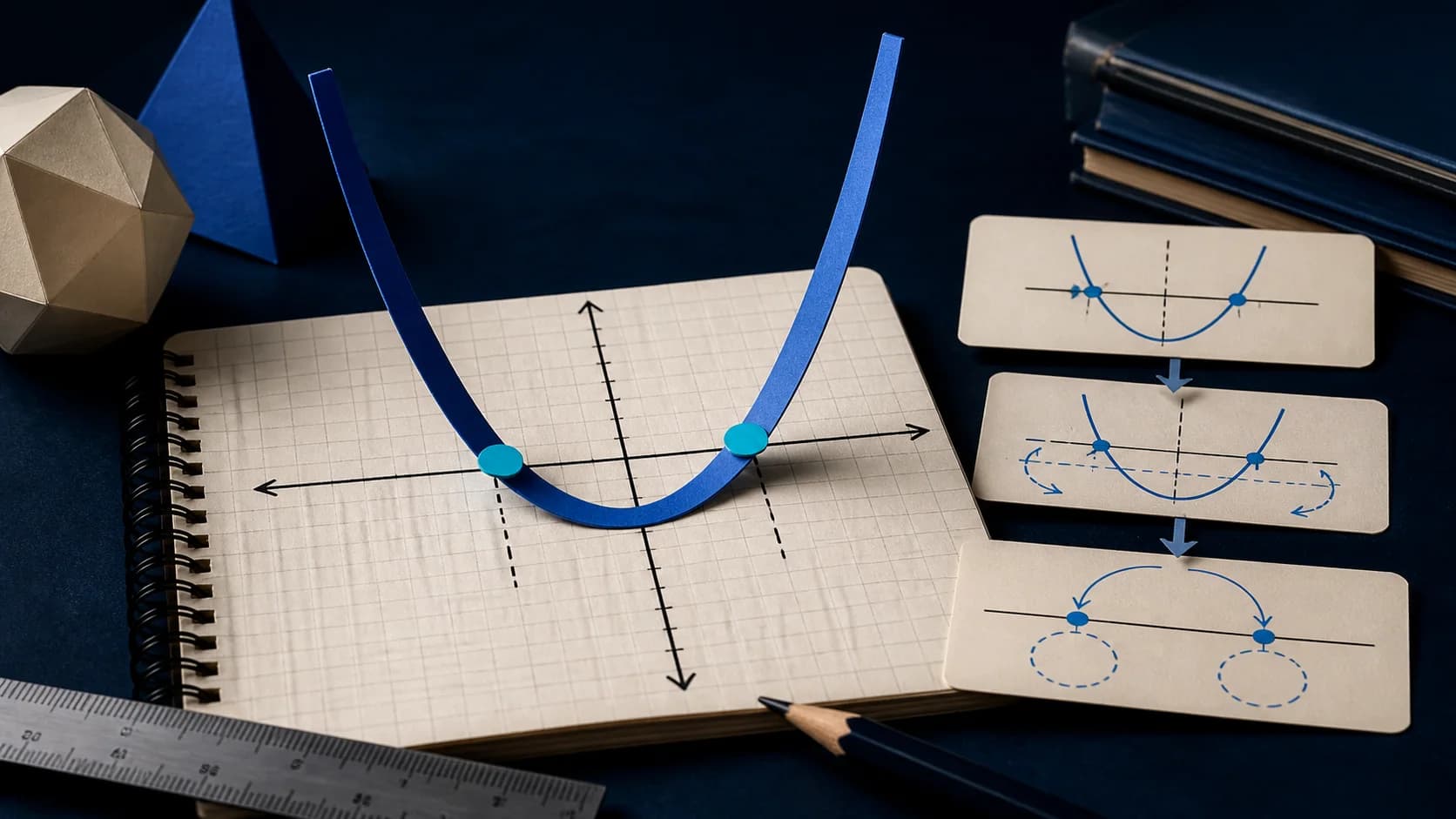
Recognize the structure, compare factoring with other methods, and verify every root in the original equation.
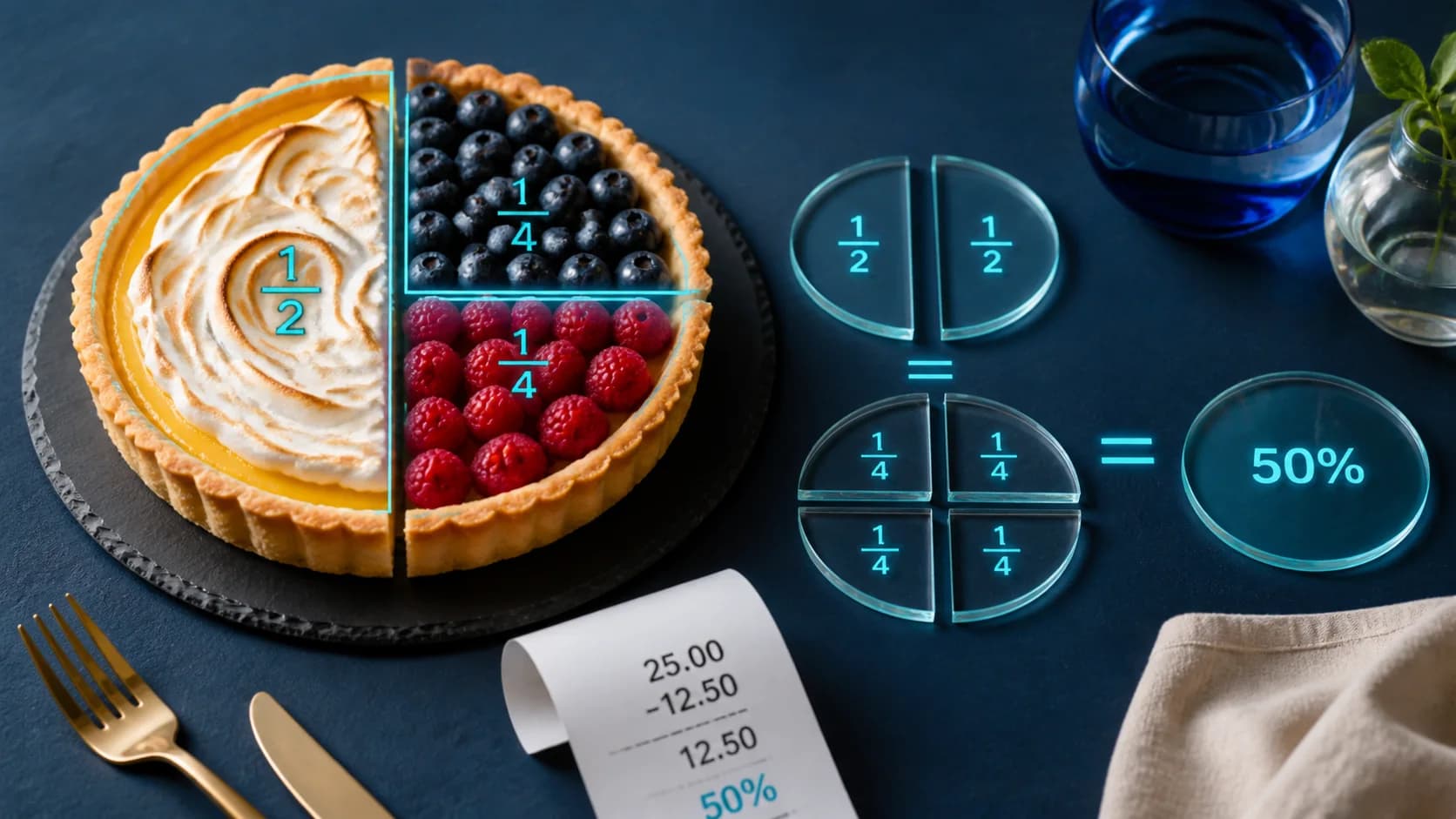
Connect parts, ratios, decimals, and percent change with representations that make each operation explainable.

Read the figure, record what is given, and connect every theorem to visible evidence before calculating.
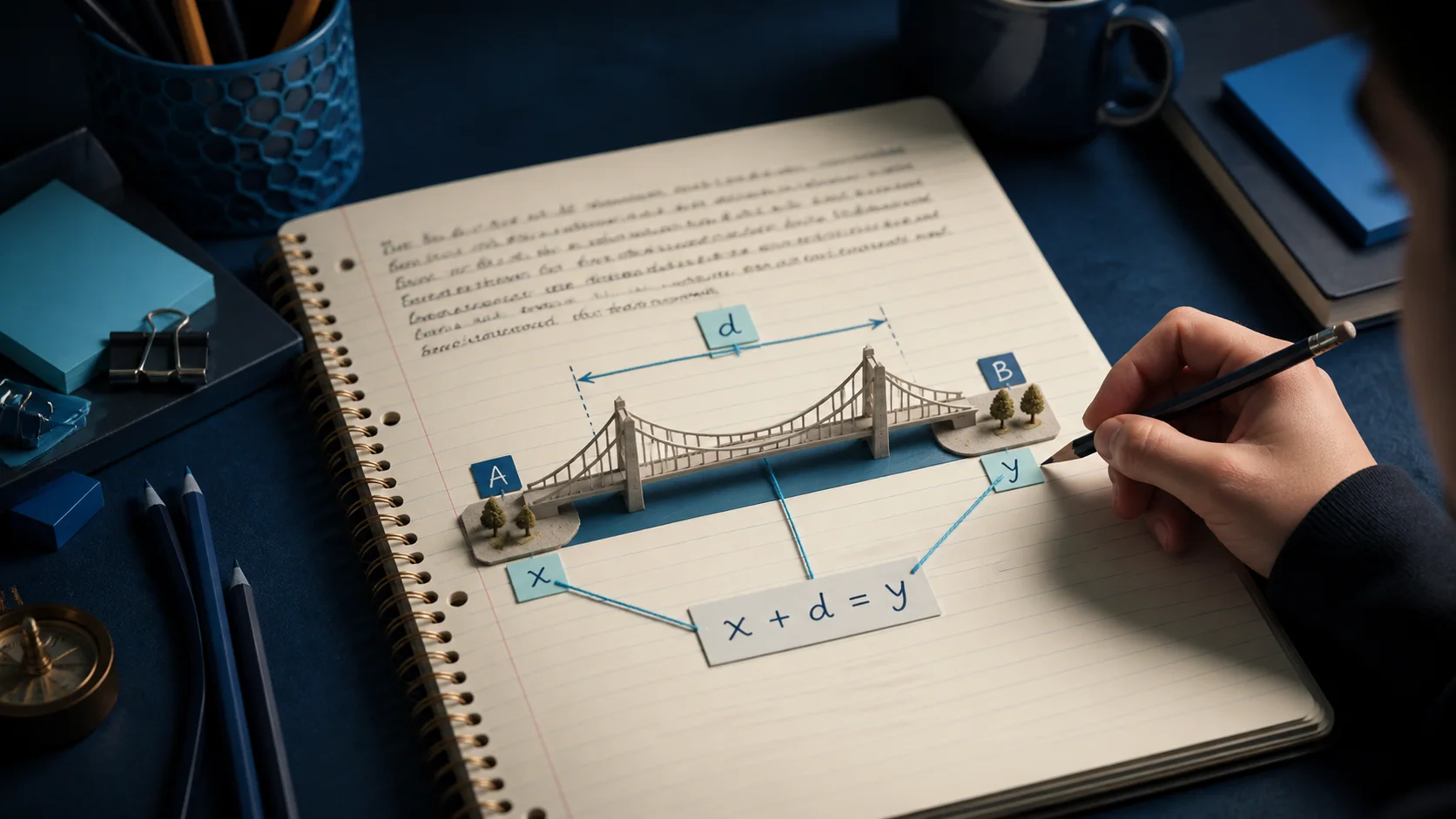
Translate a story into variables, relationships, and a checkable model before asking for the calculation.

A clear definition of photo solving, step-by-step tutoring, and what Eqora is built to do.
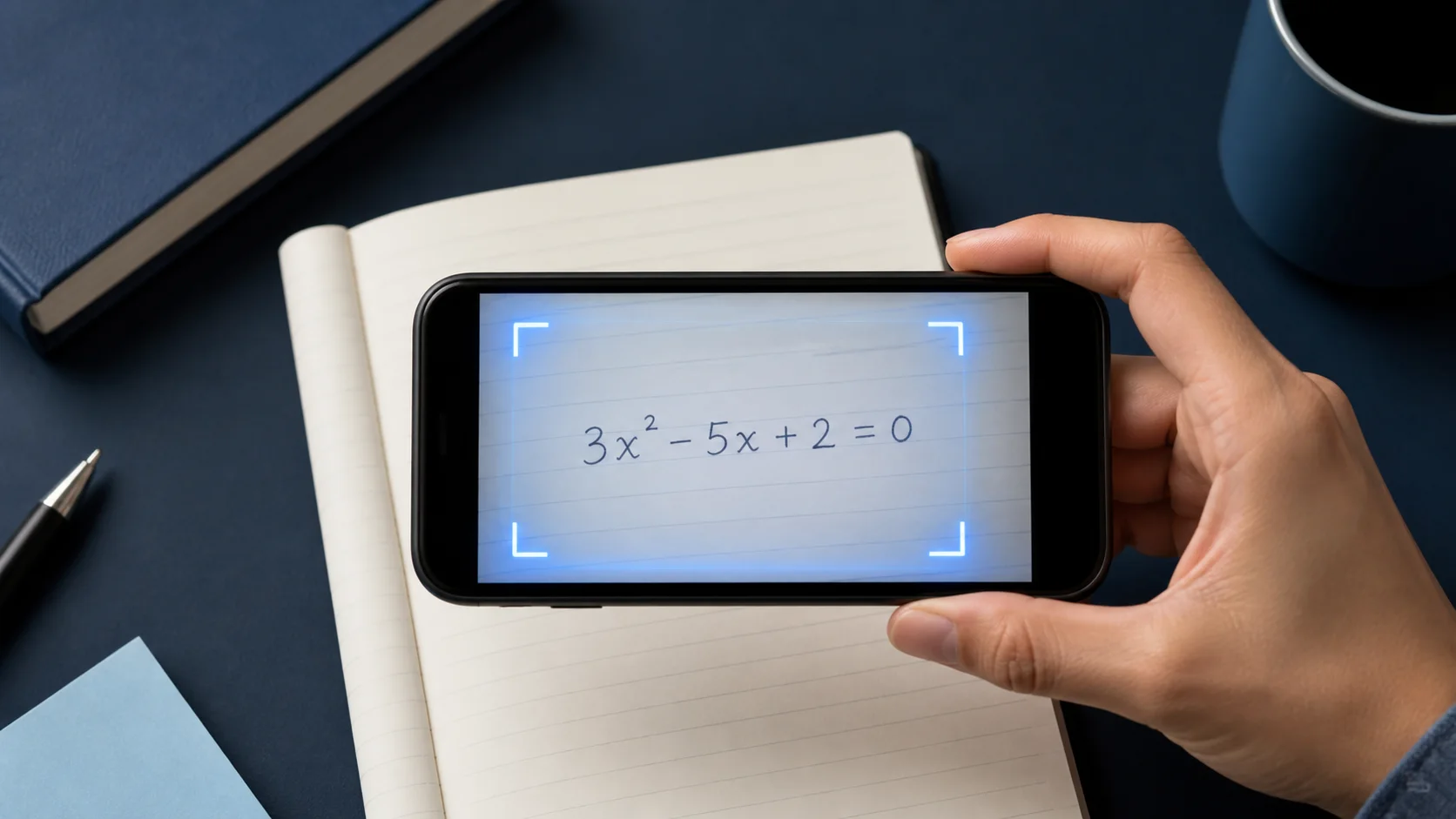
A practical workflow from camera capture to a readable step-by-step solution.

Make each solution a short lesson instead of a black-box answer.

Prompt patterns that turn a first solution into real clarity.

Equations, factoring, functions, and practice loops that stick.

A week-before plan that mixes review, timed practice, and weak-spot drills.
Study habits that turn AI help into lasting math confidence.
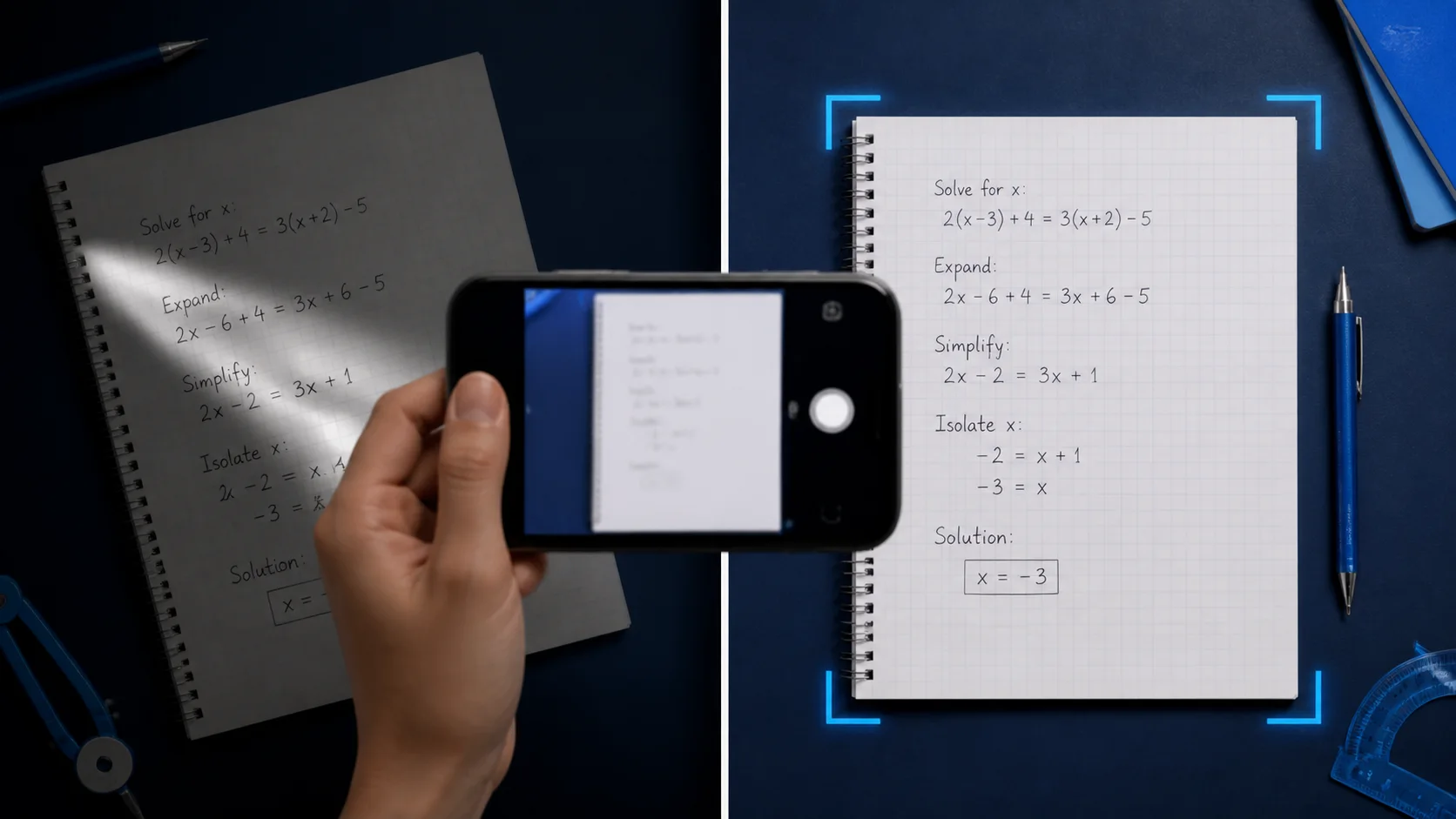
Lighting, framing, and handwriting habits that reduce misreads.

A realistic session plan for finishing assignments without losing the learning.

Limits, derivatives, and integrals with explanations you can interrogate.

When a picture of the function makes the next homework step obvious.
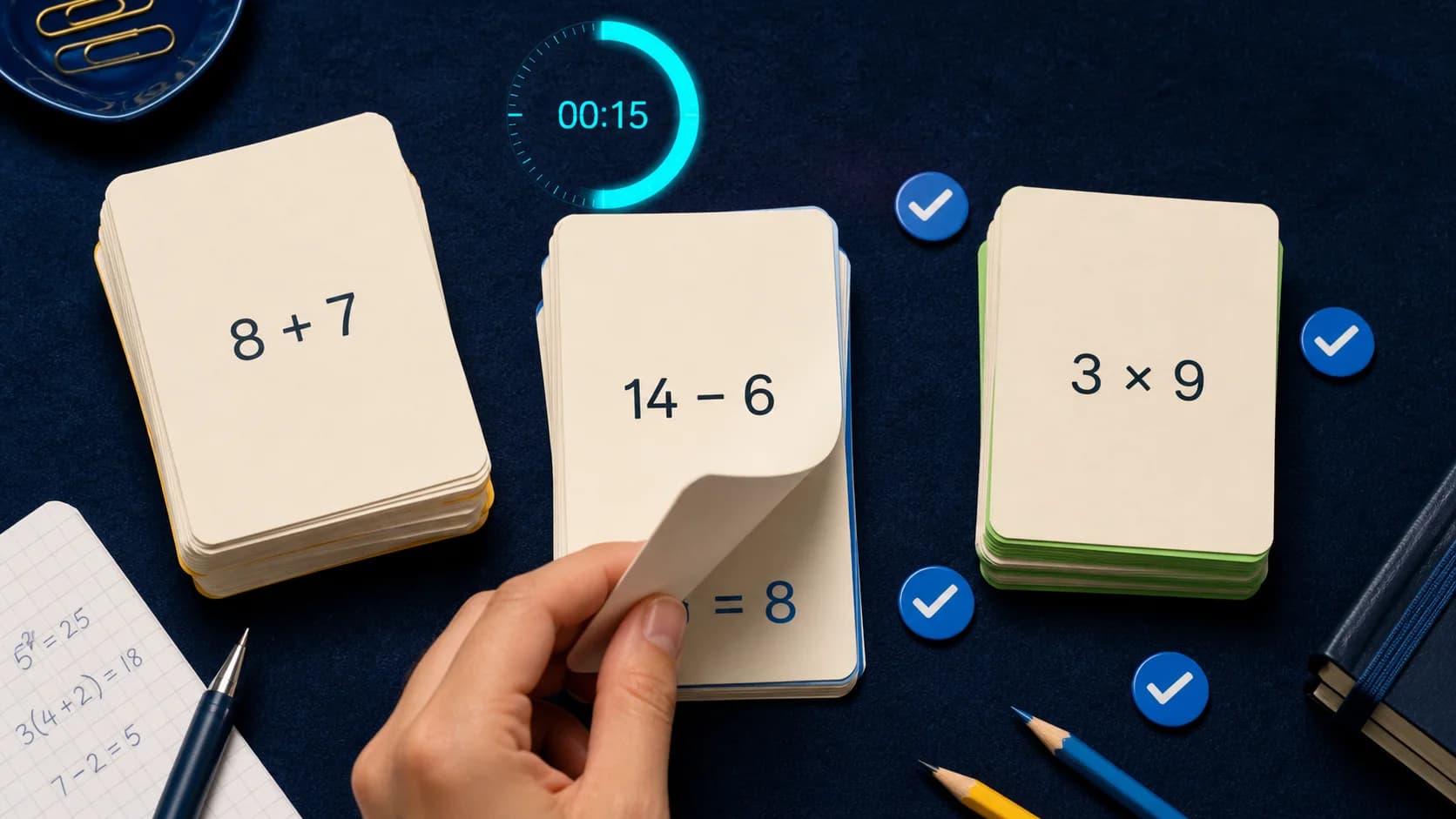
Turn a solved problem into spaced practice before the test.
A better way to get unstuck
The Eqora blog brings together practical articles about scanning homework, asking better follow-ups, studying concepts, and preparing for exams. The aim is not to hand you answers. It is to help you learn methods you can reuse.
An AI math tutor can walk through a stuck homework line, explain why a step is valid, and suggest a similar practice problem. You can move from basics through algebra, geometry, trigonometry, statistics, and calculus.
The explanation is most useful as a tutoring aid. Verify important results, follow school integrity rules, and practice until you can teach the method back.
Use a sharp, evenly lit photo of the full question. Crop away unrelated exercises and avoid glare so Scan & Solve can focus on the right prompt.
If the first result looks off, retake the photo or ask the tutor to restate how it interpreted the problem.
Start with the decision that matters most: the next algebraic move, the identity to apply, or the setup of a word problem. Precise follow-ups beat vague “I don’t get it” prompts.
Close each session with a solo retry or a short quiz so the method sticks beyond tonight’s worksheet.
Map weak topics, review Learn Math lessons, and generate flashcards or quizzes from the concepts that keep tripping you up.
Use Eqora for clarification during prep week. Keep timed practice separate and complete it with the app closed.
Our articles are written as educational study resources. They avoid guarantees, miracle claims, and the idea that AI can replace teachers or academic integrity.
Browse the latest articles above to build clearer homework habits and prepare for the next quiz with more confidence.