
Statistics · Eqora guide
Probability without replacement: what changes after a draw?
Work through a small urn problem, update the second fraction correctly, use a probability tree, and check answers with combinations and complements.
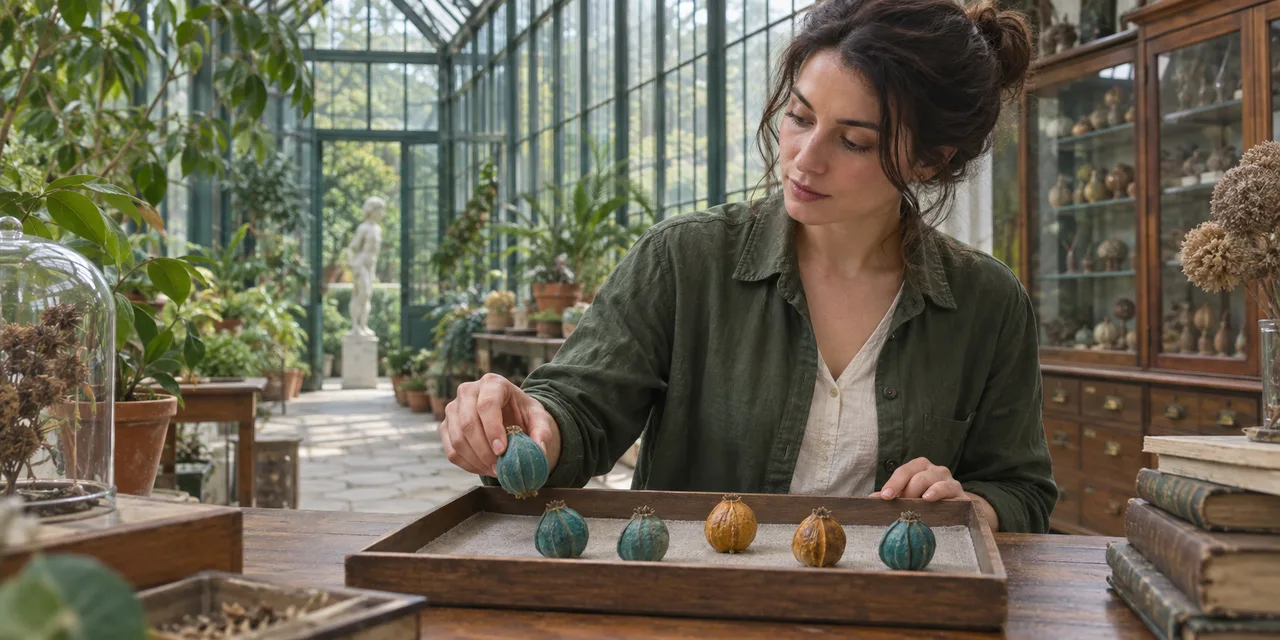
A bag holds three teal counters and two ochre counters. You draw one, keep it out, and draw again. What is the chance of two teal counters? What about one of each color? Those questions look almost identical, but they ask for different events. More importantly, the second draw starts with four counters, not five. That one physical change is the reason probability without replacement needs a different second fraction.
The safest method is to describe what remains after the first result, multiply along each possible sequence, and add sequences only when the question allows several. You do not need a complicated formula to begin. Five real counters, a quick sketch, and careful language are enough to solve the two-draw version. Later, combinations provide a second way to verify an unordered result.
This guide keeps the reasoning independent of any app. We will use the same three-teal, two-ochre collection throughout, so each new question changes the event rather than the starting data. You will see why ‘first teal, then ochre’ differs from ‘one of each,’ when the complement saves work, and how to spot a wrong denominator. For a broader foundation, you can connect this example to our guide on studying statistics and probability after you have solved it yourself.

Probability without replacement starts with the real inventory
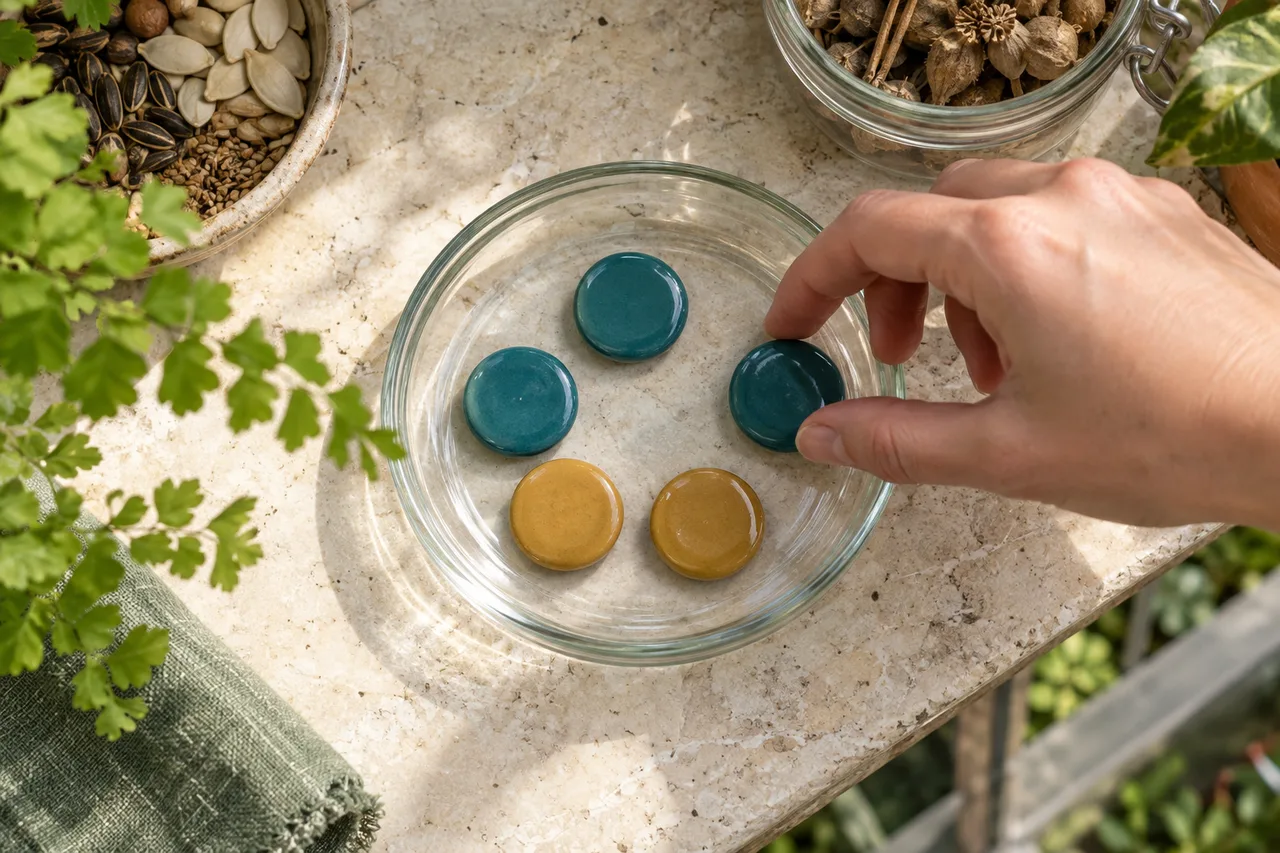
Imagine that the counters are equally likely to be selected and that you cannot see into the bag. There are five counters before the first draw: three teal and two ochre. The probability of teal first is therefore 3/5; the probability of ochre first is 2/5. These fractions add to 1, which is an immediate check that you included every possible first color. Write the inventory beside your calculation rather than trying to remember it while multiplying.
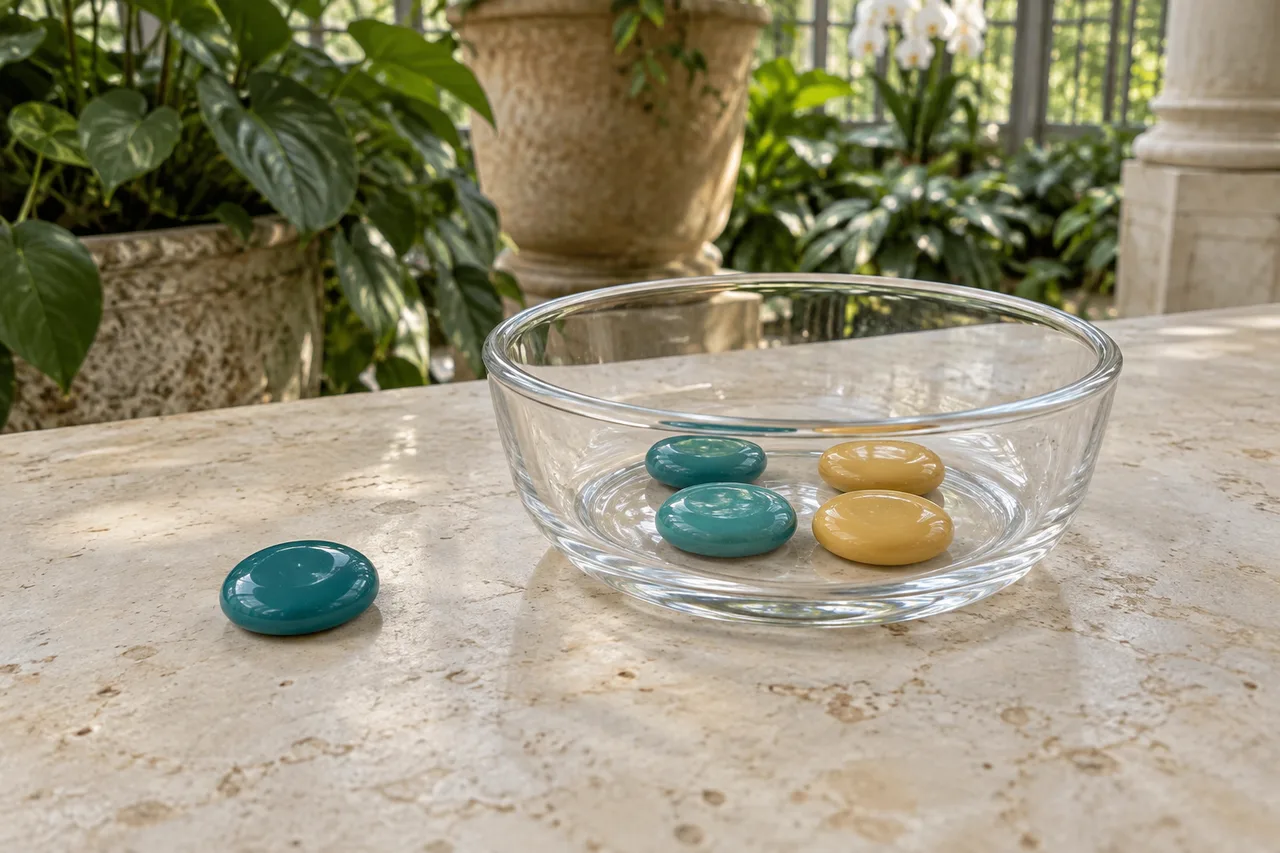
The phrase ‘without replacement’ means the first counter stays outside the bag. If you drew teal, four remain: two teal and two ochre. If you drew ochre, four remain: three teal and one ochre. The denominator for the second draw is four in either branch, but the numerator depends on what happened first. OpenStax explains this distinction in its account of dependent events: the first outcome changes the chances on the next draw.
Before computing anything, underline the event named in the question. ‘Two teal’ specifies a single color sequence. ‘One of each’ permits two sequences. ‘At least one teal’ includes three of the four color sequences. This translation from words to outcomes often matters more than arithmetic. If a problem mentions several draws, also note whether their order matters to the question, even though the physical draws occur one after another.
Multiply the fractions for a particular ordered path
Suppose the question asks for teal followed by teal. The first draw has probability 3/5. Once a teal counter is removed, two teal counters remain among four, so the second probability, given teal first, is 2/4. Multiply the probabilities along this path: P(teal then teal) = 3/5 × 2/4 = 6/20 = 3/10. The answer is 0.30, or 30 percent, not 9/25.
Why multiply? The path requires both things to happen in the stated order. The first fraction selects one of the three teal counters from five. The second selects one of the two remaining teal counters from four. Multiplication counts the combined restriction. In probability notation, this is P(T₁ and T₂) = P(T₁) × P(T₂ given T₁). The phrase ‘given T₁’ is a reminder to update the bag, not another operation you must perform.
Now try ochre followed by ochre. The first chance is 2/5. After that draw, only one ochre counter remains among four. Thus P(ochre then ochre) = 2/5 × 1/4 = 2/20 = 1/10. This result is smaller than the teal-teal chance, as it should be because there were fewer ochre counters at the start. A tree diagram from OpenStax uses the same rule: multiply branch probabilities to obtain the probability at an endpoint.
Add paths when the event allows more than one order
‘One of each color’ does not say which color must appear first. The teal-then-ochre path is 3/5 × 2/4 = 3/10. The ochre-then-teal path is 2/5 × 3/4 = 3/10. Either path satisfies the event, and the two paths cannot occur in the same two-draw trial. Add them: P(one of each) = 3/10 + 3/10 = 6/10 = 3/5, or 60 percent.
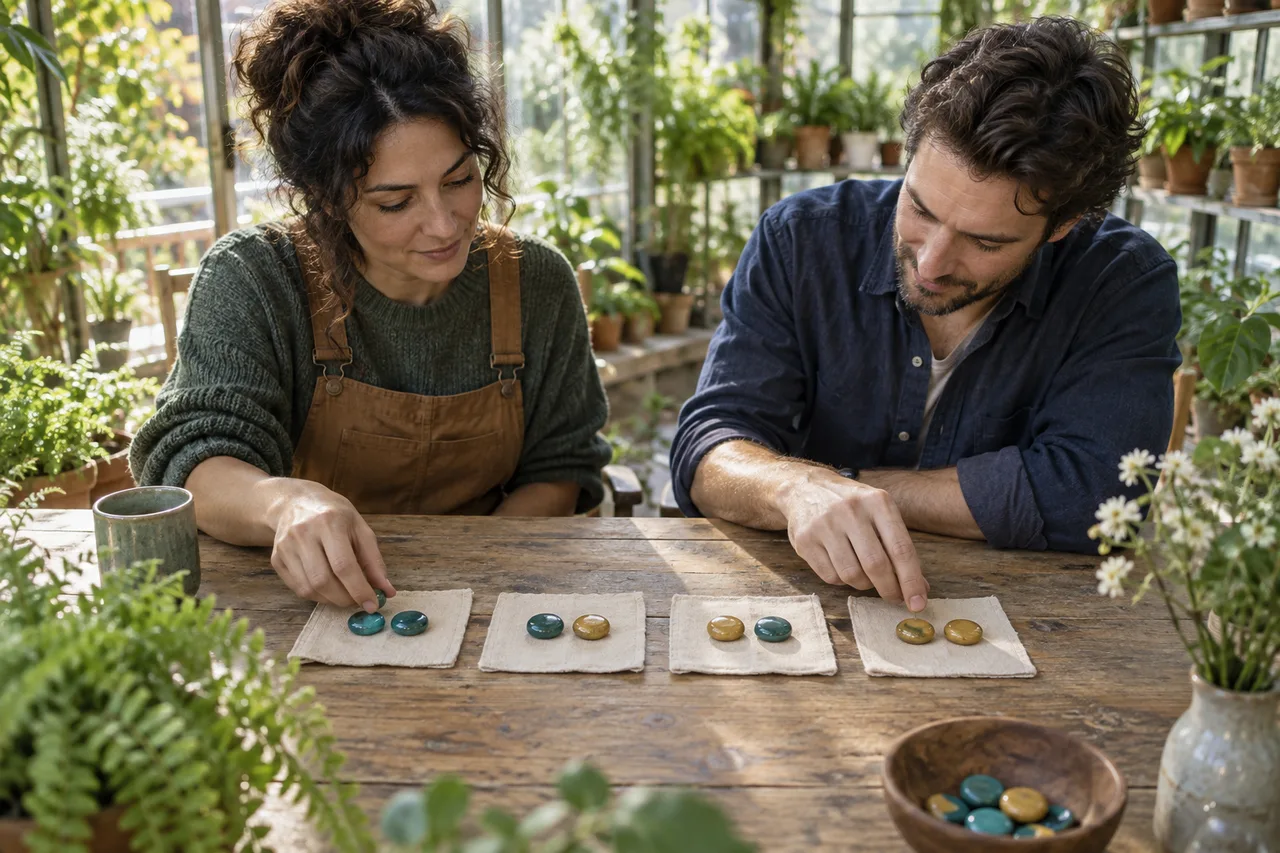
It is tempting to calculate only the path that comes to mind first and report 30 percent. That answers ‘teal then ochre,’ not ‘one of each.’ It is equally tempting to double every answer automatically. Do not double two-teal: reversing teal then teal does not create a new color sequence. The question decides whether order creates another eligible path. Sketch four endpoints, TT, TO, OT, and OO, before you decide what to add.
A tree makes the accounting visible. At its first fork write teal 3/5 and ochre 2/5. From teal, the second fork is teal 2/4 or ochre 2/4. From ochre, it is teal 3/4 or ochre 1/4. Multiply along each complete path to get 3/10, 3/10, 3/10, and 1/10. The four values sum to 1, so no color sequence is missing or counted twice.
For ‘at least one,’ test the opposite event first
The event ‘at least one teal’ includes TT, TO, and OT. Adding their probabilities gives 3/10 + 3/10 + 3/10 = 9/10. That is correct, but there is a shorter calculation: the only way to get no teal at all is OO. Because OO has probability 1/10, the complement rule gives P(at least one teal) = 1 − 1/10 = 9/10. The two methods agree.
The word ‘at least’ means one or more, not exactly one. With two draws, ‘at least one teal’ includes two teal counters. ‘Exactly one teal’ is only TO or OT and has probability 6/10. Confusing these events changes the answer by 3/10 in this example. In a word problem, translate the phrase into allowed outcomes before reaching for a formula; our guide to interpreting math word problems offers a useful routine for that step.
Complements become especially valuable when there are many draws. ‘At least one success’ may describe a long list of paths, while ‘none’ may be a single repeated failure path. Yet the opposite must be stated precisely. The complement of ‘at least one teal’ is ‘zero teal,’ not ‘one ochre.’ Here zero teal means both selected counters are ochre. Write that sentence beside 1 − P(no teal) so the subtraction stays tied to the original event.
Check an unordered answer with combinations
When the order of the two selected counters does not matter, counting pairs gives an independent check. Five distinct counters can make 5 choose 2 = 10 unordered pairs. The two ochre counters make one ochre-ochre pair. The three teal counters make 3 choose 2 = 3 teal-teal pairs. The remaining six pairs contain one of each color, because each of three teal counters can pair with either of two ochre counters.
Therefore P(two teal) = 3/10, P(two ochre) = 1/10, and P(one of each) = 6/10. These are exactly the results from the sequential tree. The methods count different representations of the same random experiment: the tree retains the draw order; combinations ignore it. Do not add a factor of two after using combinations, because the six mixed pairs already include every possible teal-and-ochre pairing once.
The counting argument assumes each individual counter is equally likely to be drawn and each two-counter subset is equally likely. Color categories need not be equally likely: there are three times as many teal-teal pairs as ochre-ochre pairs. This is why simply listing TT, TO, and OO as three unordered labels and assigning 1/3 to each is wrong. The labels represent different numbers of actual pairs. Counting physical objects keeps that distinction clear.
Separate replacement, independence, and a final check
If the first counter is returned and the bag is mixed again, the collection returns to three teal and two ochre before the second draw. Then P(teal twice) = 3/5 × 3/5 = 9/25, or 36 percent. Without replacement it was 3/10, or 30 percent. The two answers differ because the first outcome changes the second chance only when the counter stays out. Ask which physical experiment the question describes before selecting a formula.
Without replacement, the two draws are generally dependent: knowing the first color changes the second-color probability. Dependent does not mean you cannot multiply. It means you multiply by a conditional second fraction. The first denominator is five; the next is four. After teal, its numerator becomes two; after ochre, the teal numerator remains three. A common faulty solution changes the denominator but forgets the numerator, or leaves both fractions at their first-draw values.
Finish with a fresh test, not a copied answer. Put four green and three white counters in a bag, draw twice without replacement, and find the chance of one of each. The two paths are 4/7 × 3/6 and 3/7 × 4/6, each 12/42; together they give 24/42 = 4/7. Then check by combinations: there are 7 choose 2 = 21 pairs and 4 × 3 = 12 mixed pairs, so 12/21 = 4/7. If either route disagrees, recount what remains after the first draw and check which paths the words permit. Our independent answer-checking guide provides more ways to catch errors without relying on a key.
Put it into practice now
Choose one problem from your current homework or review set. Attempt it before opening Eqora, then use the app only at the point where your own reasoning stops.
- State what the problem is asking before you solve it
- Identify the first step you cannot justify
- Ask Eqora one focused follow-up about that step
- Finish with a similar problem and no solution in view
The session is complete when the method is clearer, not simply when the worksheet has one more answer.