
Geometry · Eqora guide
Cylinder surface area: count the side, then the ends
Unroll the curved side, decide which circular ends exist, and calculate the exposed area without confusing it with volume.
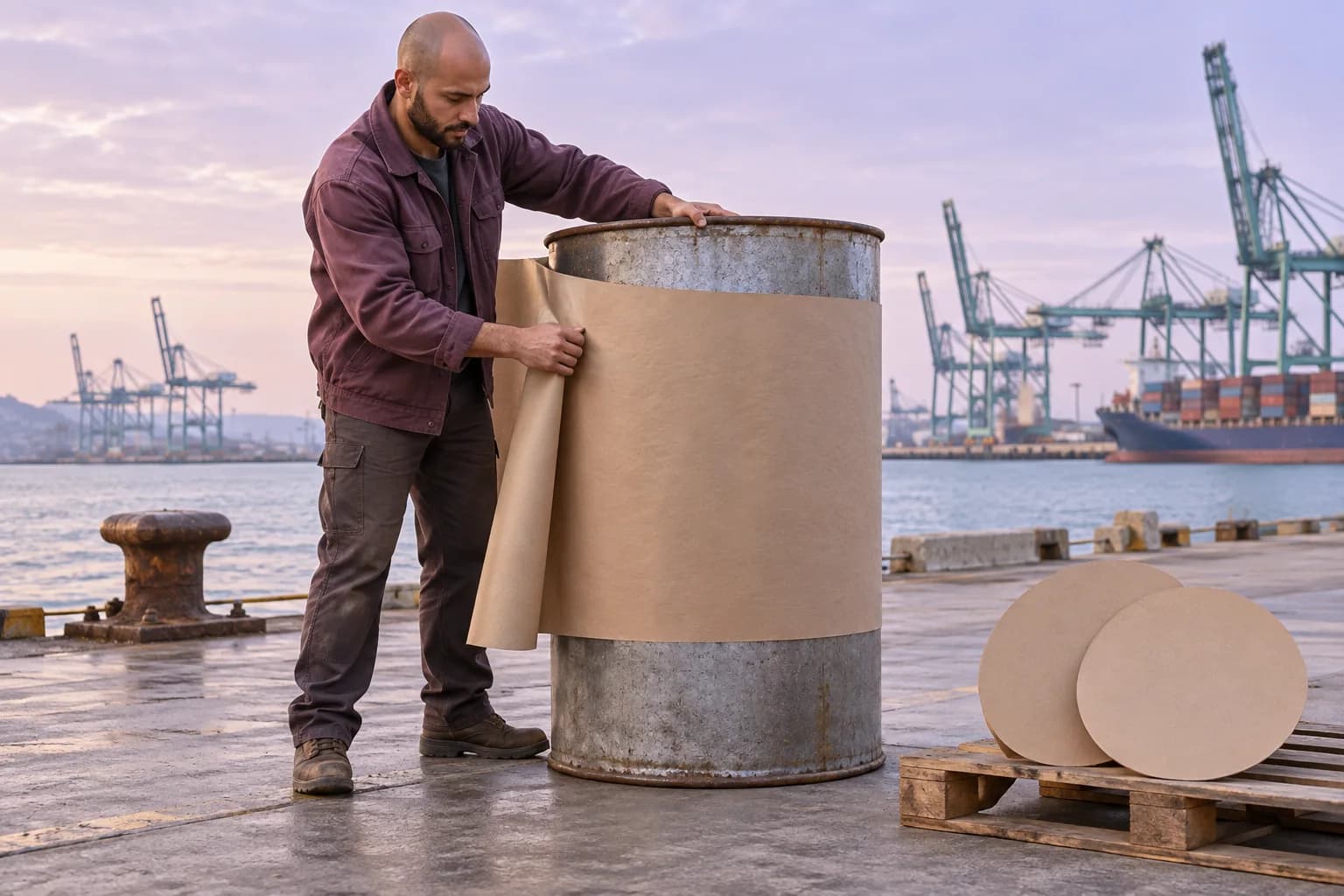
A cylinder can mean a sealed can, a tube without ends, or a cup without a lid. All three have the same radius and height, yet they need different amounts of material. Before writing a formula, ask which surfaces the question wants you to cover. For a closed right circular cylinder, the answer is the curved side plus two equal circular ends. If one end is missing, count only one circle; if both are missing, count none.
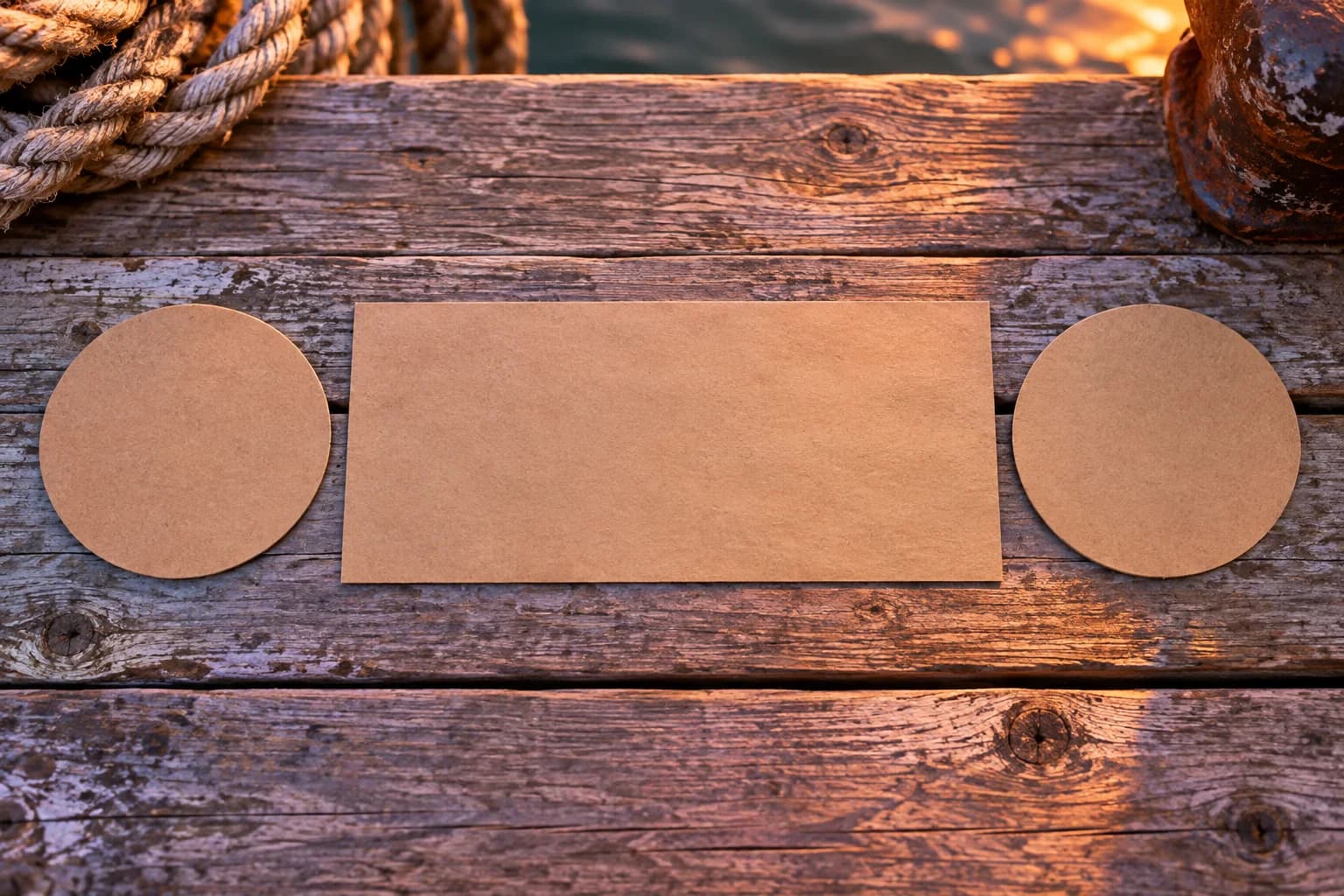
The most useful way to see cylinder surface area is to imagine cutting and flattening a paper model. The side becomes a rectangle whose width is one circumference, and the ends become circles. This guide develops the formula from those parts, works through exact and decimal examples, handles diameter, open tops and mixed units, and shows checks that catch a wrong answer. The photographs are tactile analogies, not scale-accurate diagrams or measurements. No app is necessary to complete the method.
Cylinder surface area starts with the surfaces
Take a right circular cylinder with base radius r and perpendicular height h. Its boundary has a curved side and, when closed, two circular bases. Each base has area πr². The side is often called the lateral surface. Thinking of the object as three separate pieces prevents the common mistake of using a single formula before deciding whether the problem describes a can, an open vessel, or only a label wrapped around the middle.
Cut the side along a vertical line and lay it flat without stretching it. The resulting rectangle has height h. Its other side has the length of the circle's circumference, 2πr. Its area is therefore (2πr)h = 2πrh. Add two bases, each πr², for a closed cylinder: S = 2πrh + 2πr². OpenStax derives the same formula from these three pieces. This is the area of the ideal solid, counting each boundary once; seams and thickness are separate allowances.
Why the side is circumference times height
A common shortcut says the lateral area is 2πrh. You can reconstruct it rather than memorize it. If the radius is 3 cm, one circuit around the base measures 2π·3 = 6π cm. A sheet that wraps exactly once around a cylinder 8 cm high must be 6π cm long and 8 cm tall. Multiplying those two lengths gives 48π cm². The first factor follows around the circle; the second follows the straight height.
Do not use πr²h here. That expression is volume, with cubic units, because it multiplies the area of a base by a length. Surface area asks how much flat material covers the boundary, so the side must come from circumference times height. Nor is 2r the circumference: 2r is only the diameter. Multiplying diameter by height makes a rectangle too short to wrap around the cylinder. You need π times that diameter.
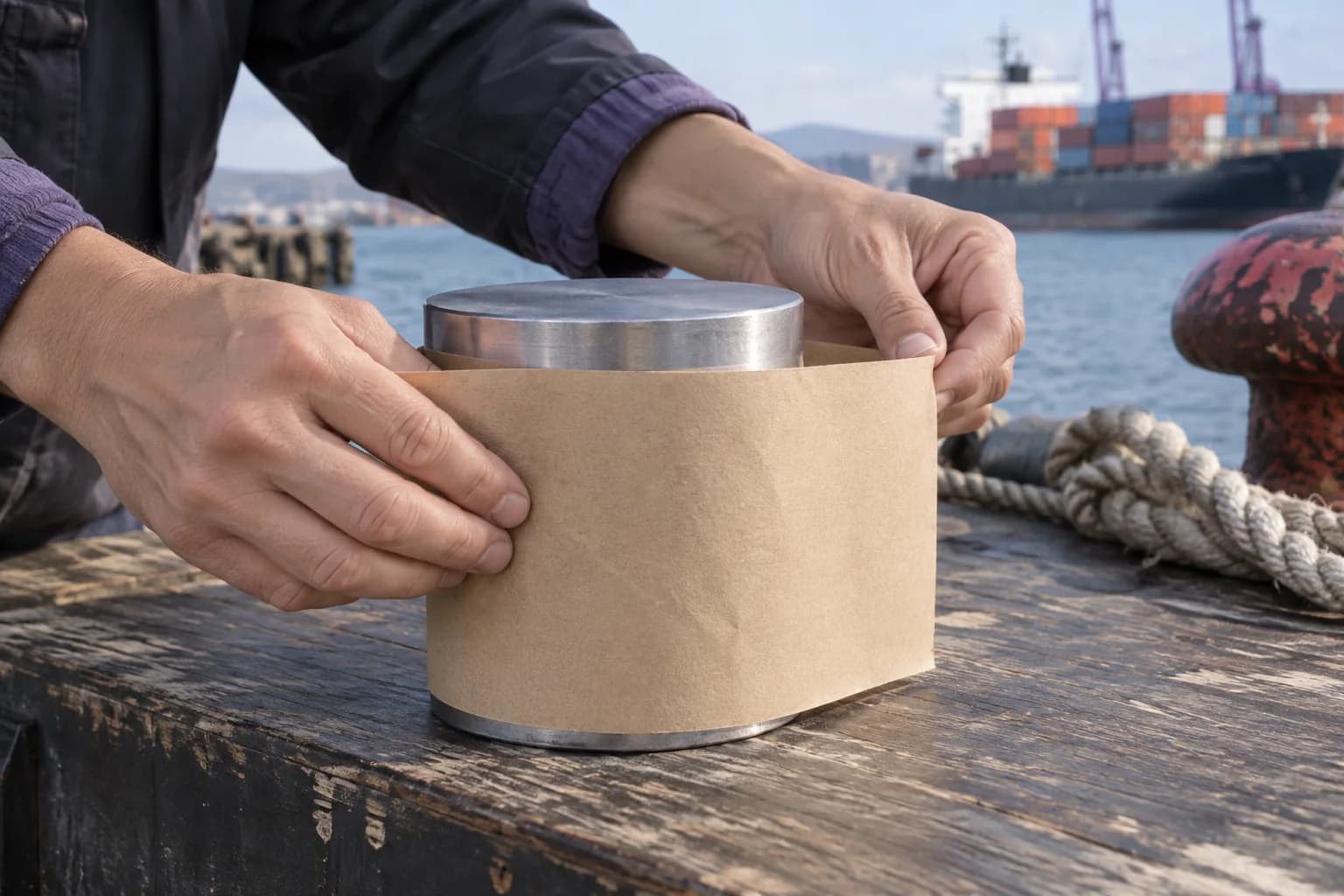
The wrapping photograph shows only the curved side receiving a sheet. The top face remains uncovered. This physical test is useful when a formula seems abstract: unroll the sheet in your mind and ask whether its long edge could travel around the whole rim once without a gap or overlap. For the idealized calculation, ignore cutting waste and any extra strip for gluing; include them only if the task explicitly asks for manufacturing material.
A closed cylinder: calculate the side and both ends
Suppose a closed cylindrical container has radius 3 cm and height 8 cm. First compute the side: 2πrh = 2π·3·8 = 48π cm². One circular end has area πr² = π·3² = 9π cm². Both ends together contribute 18π cm². The total is 48π + 18π = 66π cm², approximately 207.35 cm² when π is evaluated at the end. Leaving the exact answer as 66π is often preferable if the exercise does not request a decimal.
Write the two contributions on separate lines before combining them. Doing so makes it easy to catch an omitted bottom, an extra lid, or the frequent slip π·3² = 6π. Square the radius first: 3² = 9. If your answer is 48π, you found only the side. If it is 57π, you counted one end, which would be correct for an open-top container but not for the closed one described here.
An open top changes the count, not the side
Now remove the lid from the same container while keeping its bottom. The curved side is still 48π cm² and the bottom is 9π cm². Its ideal open-top surface area is 57π cm², approximately 179.07 cm². Do not use the closed formula and hope that an implicit top will disappear. Subtracting one πr² from 66π does give 57π, but stating the pieces directly makes the physical assumption clear.
A tube open at both ends has only the lateral area, 48π cm² for these dimensions. A paper label that covers just the wall also uses 48π cm² even if the product inside has a lid and a bottom: the object may be closed, but the question asks about the label. Conversely, painting an outside wall and a base is a different scope from painting inside and outside faces of a real thick-walled object. State which faces are exposed and counted before choosing a number.
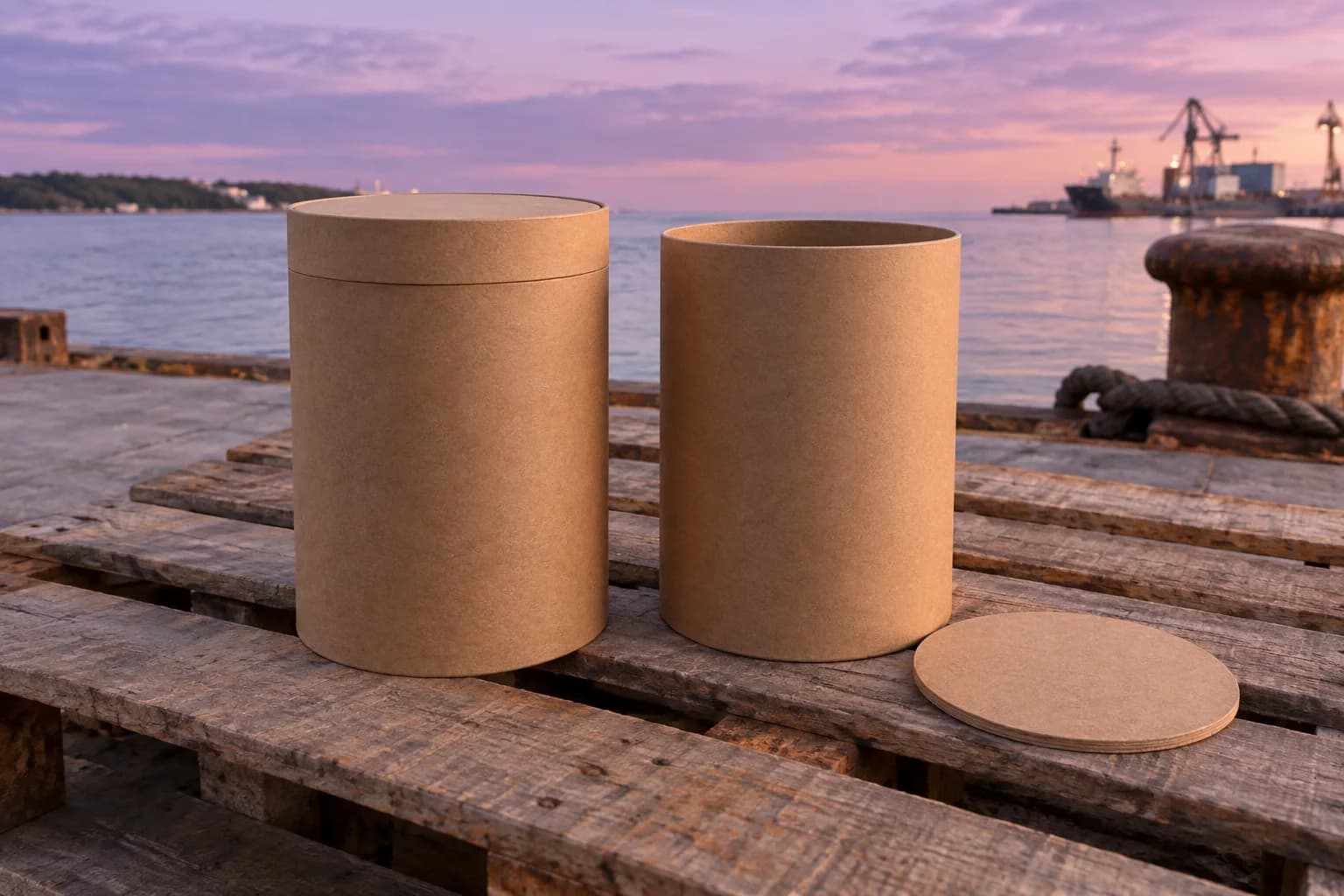
The two containers pictured have matching dimensions but different tops. Their difference is exactly one base area in the simple model. The image is conceptual; it does not certify that the manufactured objects have zero thickness. If a word problem includes a rim, seam, or material loss, calculate the geometric area first and then add the specified allowance separately. Avoid inserting a guessed percentage that the problem never supplied.
Diameter and mixed units deserve their own line
A problem may give diameter d instead of radius r. Since d = 2r, divide the diameter by two before squaring it for a base. A cylinder with diameter 6 cm has radius 3 cm, not 6 cm. If you insert 6 into πr², the base area becomes four times too large. You can write the side directly as πdh because the base circumference is πd, but the base still uses π(d/2)². Keep the distinction visible on the page.
Measurements must also share a unit before multiplication. If a radius is 3 mm and a height is 8 cm, convert the height to 80 mm. The lateral area is 2π·3·80 = 480π mm². Two bases add 2π·3² = 18π mm², so the closed area is 498π mm². In square centimeters this is 4.98π cm², because 1 cm² contains 100 mm². Dividing by 10 rather than 100 is a unit-conversion error even if the geometry is sound.
A quick scale check catches many errors: the dimensions in that mixed-unit example are small, so hundreds of square centimeters would be implausible. Converting first also keeps the final unit consistent with the task. If the assignment asks for a rounded decimal, retain π during the intermediate steps and round once at the end. Early rounding can hide a small but real discrepancy between two otherwise equivalent calculations.
Surface area is not the capacity inside
For the closed r = 3 cm, h = 8 cm example, surface area is 66π cm². Volume is πr²h = π·9·8 = 72π cm³. The numerical coefficients are close here by coincidence; the quantities are fundamentally different. Area measures a boundary and has square units. Volume measures three-dimensional space and has cubic units. A can can need more sheet material without holding more liquid if its dimensions change in a certain way.
If every length of a cylinder is doubled, its surface area becomes four times as large: each piece is made from two lengths multiplied together. Its volume becomes eight times as large because it uses three length factors. If only the radius doubles while height stays fixed, the side area doubles but the two base areas quadruple. This explains why the share of the total coming from the ends changes with the shape. Do not assume a universal percentage for the caps.
Reverse the formula only after deciding what is known
Sometimes a task gives an area and asks for a missing dimension. Suppose a label covers 40π cm² of lateral area and the cylinder has radius 2 cm. Use only the lateral formula: 40π = 2π·2·h. Dividing by 4π gives h = 10 cm. Plug back in: a circumference of 4π cm times a height of 10 cm makes 40π cm². Adding two bases here would solve a different, closed-surface question.
If the same 40π cm² were stated to be the total area of a closed cylinder with radius 2 cm, subtract the two bases first. Together they are 2π·2² = 8π cm². The side then has 32π cm², so 32π = 4πh and h = 8 cm. Both calculations use the same radius and the same stated area, yet the heights differ because the covered faces differ. This is why labeling the area as lateral or total matters before rearranging anything.
Check the result as a physical object
Before trusting a final line, make a small face inventory: side, top, bottom. Mark each as included or excluded by the wording. Then verify that every radius comes from the center to the rim, every height is perpendicular to the base, and all lengths use one unit. The height of a slanted side in a non-right cylinder is not automatically the h in the formula above; this guide is specifically about right circular cylinders.
Next compare the size of the terms. For a closed cylinder with positive radius and height, total area must exceed lateral area by exactly 2πr². For an open-top cylinder it must exceed lateral area by πr². If your closed answer is smaller than the side alone, an arithmetic or sign error has entered. If you report cm³ for sheet material, you have probably calculated volume instead. These checks do not need the official answer.
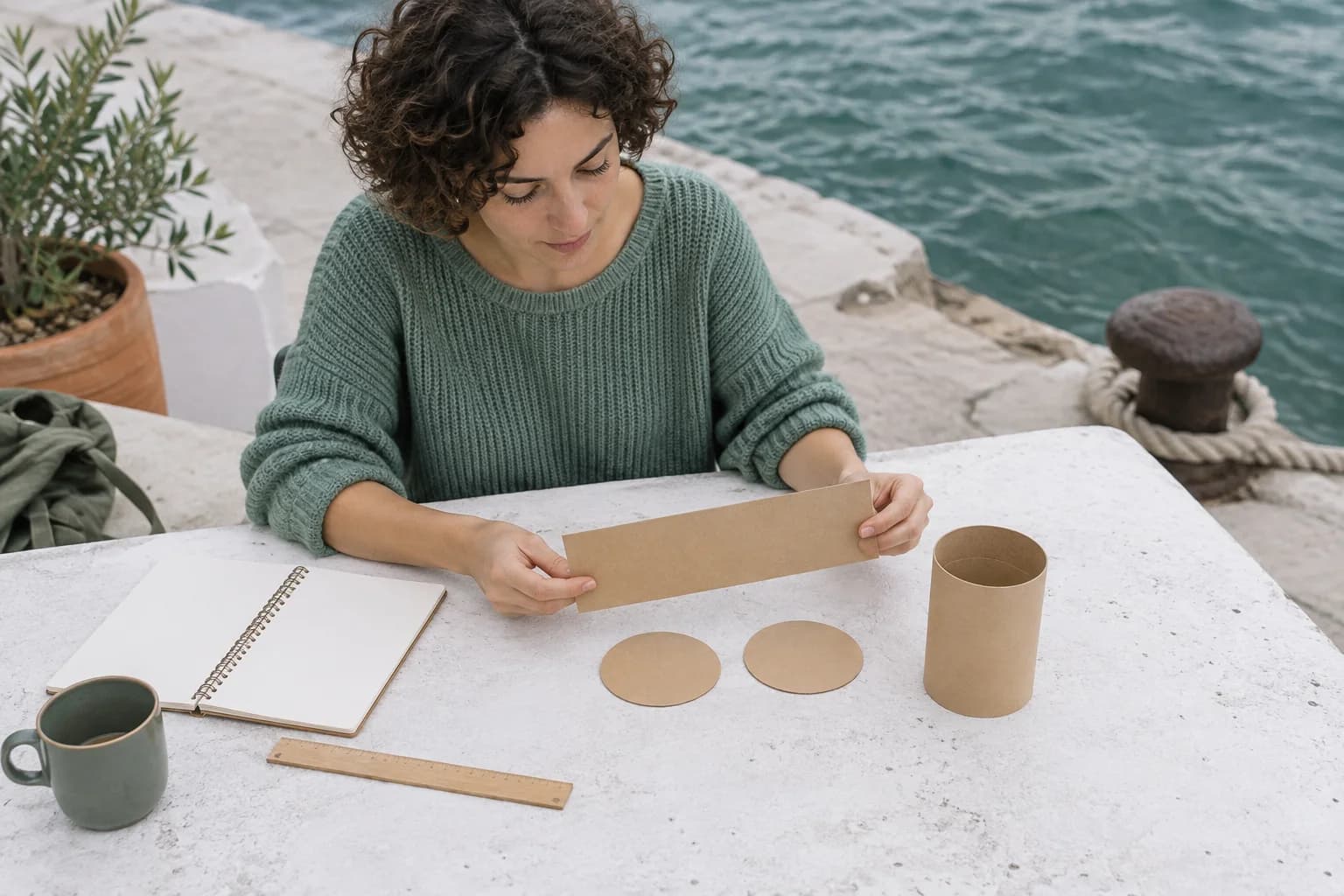
Try one fresh case without looking back: a right cylinder has radius 4 cm and height 7 cm. Its side is 2π·4·7 = 56π cm². One base is 16π cm². A closed version has 88π cm²; a version with one missing lid has 72π cm²; a side-only wrap has 56π cm². Ask which of those three quantities the wording requests, then justify the choice. The independent paper check in the photo is a reminder to reason from the pieces, not to copy the nearest formula.
Put it into practice now
Choose one problem from your current homework or review set. Attempt it before opening Eqora, then use the app only at the point where your own reasoning stops.
- State what the problem is asking before you solve it
- Identify the first step you cannot justify
- Ask Eqora one focused follow-up about that step
- Finish with a similar problem and no solution in view
The session is complete when the method is clearer, not simply when the worksheet has one more answer.